
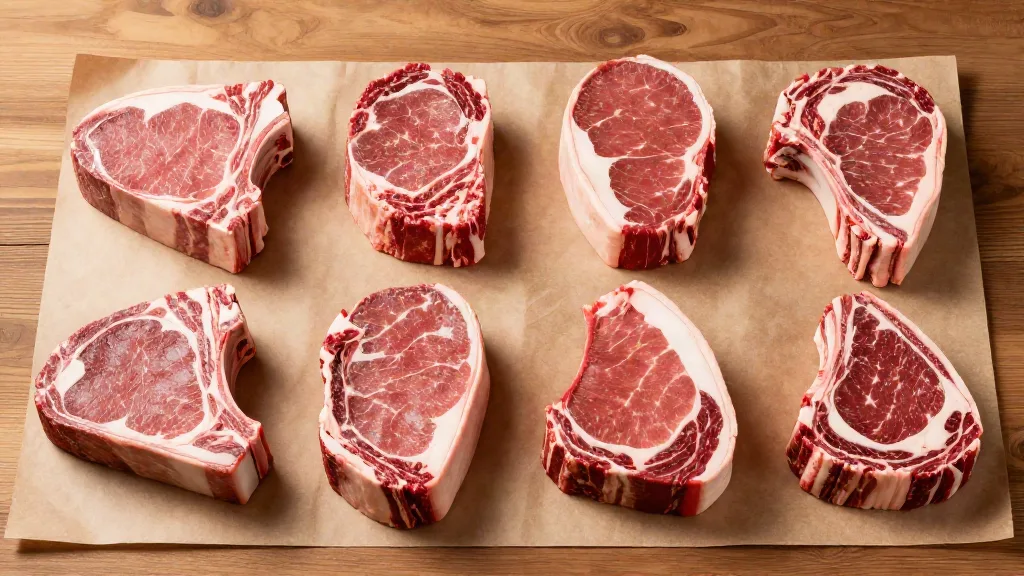
Beef Cuts Guide: Every Cut Explained and How to Cook It Right
The moment I finally understood beef was the night I grilled a chuck steak like a ribeye and served something my family politely chewed for five minutes per bite. It wasn’t a bad piece of meat. It was a great piece of meat cooked the wrong way. The same cut, braised low and slow the following weekend, fell apart under a fork.
Choosing the right cut has never mattered more. According to Bureau of Labor Statistics data published by the Federal Reserve Bank of St. Louis, the average price of uncooked beef steaks in U.S. cities was about $12.81 per pound in August 2026, while ground beef averaged about $7.16 per pound. When beef costs this much, every mistake at the meat counter hurts.
I’ve made most of those mistakes myself: a beautiful tenderloin cooked to well-done because I treated it like a roast, a brisket I tried to slice after three hours instead of ten, and plenty of “bargain” cuts that turned to leather because I didn’t know they needed a different method entirely.
If you’ve ever stood in front of the meat case wondering what “chuck eye” or “tri-tip” means, or bought a cut because it was on sale and then had no idea how to cook it, this guide is for you. Before we start, keep my meat internal temperature guide open in another tab, because every cut in this guide has a target temperature.
Here’s the one idea that makes beef make sense: a cut’s tenderness depends on how hard that muscle worked when the animal was alive. Muscles that barely move are tender and want quick, hot cooking. Muscles that work all day are tough and full of connective tissue, and they want long, slow, moist heat. Once you know where a cut comes from, you know how to cook it. This guide takes you through every part of the animal, cut by cut.
Beef Cuts Quick Reference
The Primal Cuts at a Glance
A beef carcass is first divided into large sections called primals. Each primal is then cut into the smaller retail cuts you see at the store. The table below is based on figures from the National Cattlemen’s Beef Association carcass breakdown, which is distributed by Montana State University Extension.
| Primal | Share of carcass | Tenderness | Best cooking methods | Popular cuts |
|---|---|---|---|---|
| Chuck (shoulder) | About 29% | Mostly tough, a few tender gems | Braising, slow roasting; flat iron can be grilled | Chuck roast, flat iron, chuck eye, short ribs |
| Rib | About 9% | Very tender | Searing, grilling, roasting | Ribeye, prime rib, back ribs |
| Loin (short loin and sirloin) | About 16% | Very tender to tender | Searing, grilling, roasting | Strip, tenderloin, T-bone, porterhouse, top sirloin, tri-tip |
| Round (hind leg) | About 22% | Lean and firm | Roasting to medium-rare, braising, thin slicing | Top round, eye of round, bottom round |
| Brisket, plate and flank | About 19% | Tough or coarse-grained | Smoking, braising, or hot and fast with thin slicing | Brisket, short ribs, skirt, flank, hanger |
Cooking Method by Cut Type
| Cut type | Examples | Method | Cook to |
|---|---|---|---|
| Tender steaks | Ribeye, strip, filet | Hot and fast | Medium-rare to medium |
| Lean, firm cuts | Top sirloin, top round, eye of round | Hot sear, or roast low, and slice thin | Medium-rare |
| Coarse-grained steaks | Flank, skirt, hanger | Very hot and fast, slice across the grain | Medium-rare to medium |
| Tough, collagen-rich cuts | Chuck roast, brisket, short ribs, shank | Low and slow, often with liquid | Fork-tender, usually 195–205°F |
Why Some Cuts Are Tender and Others Are Tough
Before we walk through the cow, it’s worth understanding what makes one piece of beef melt in your mouth and another fight back.
It’s All About Work
A cow spends most of its life standing, walking and grazing. The muscles of the legs, shoulders and chest do most of that work, so they develop thick muscle fibers and a lot of connective tissue. The muscles along the middle of the back barely move, so they stay fine-grained and tender.
That’s why the tenderloin, which runs along the inside of the spine and does almost no work, is the most tender cut on the animal, while the shank, from the lower leg, is one of the toughest.
The Science: Shear Force Rankings
Meat scientists measure tenderness with a machine that records the force needed to cut through a cooked sample, called Warner-Bratzler shear force. In a ranking prepared for the Beef Checkoff, University of Nebraska meat scientists Chris Calkins and Gary Sullivan compared dozens of beef muscles this way.
The most tender muscles in their ranking included:
- The tenderloin (psoas major), the most tender of all.
- The top blade, which is where the flat iron steak comes from.
- The rib cap (spinalis dorsi), the rich outer ring of the ribeye.
- The petite tender (teres major), a small, little-known cut from the shoulder.
Some of the toughest muscles in the same ranking came from the chuck, including the hump meat and the shoulder.
Notice something surprising: two of the most tender muscles on the whole animal, the flat iron and the petite tender, come from the chuck, a primal better known for pot roast. That’s why it pays to learn individual cuts rather than writing off an entire section of the animal.
Collagen: The Tough Cut’s Secret Weapon
Tough cuts are tough mainly because of collagen, a protein in connective tissue. Cooked quickly, collagen stays tight and chewy. Cooked slowly with moisture, it gradually breaks down into gelatin, which gives braised and smoked beef its rich, silky texture.
How long that takes depends on the cut. America’s Test Kitchen explains that hard-working muscles like the brisket develop cross-linked, insoluble collagen, which only softens with long exposure to heat. That’s why brisket often takes about twice as long to become tender as other braising cuts.
METHOD TIP: Here’s a simple rule: if a cut has a lot of visible connective tissue, the shiny white seams and sheets between the muscles, it wants low and slow cooking. If it’s a solid, fine-grained piece of muscle, it wants hot and fast.
The Chuck (Shoulder)
The chuck is the biggest primal on the animal, about 29% of the carcass, according to the NCBA. It’s a complex area made of many different muscles, and it’s where some of the best value in the whole meat case can be found.
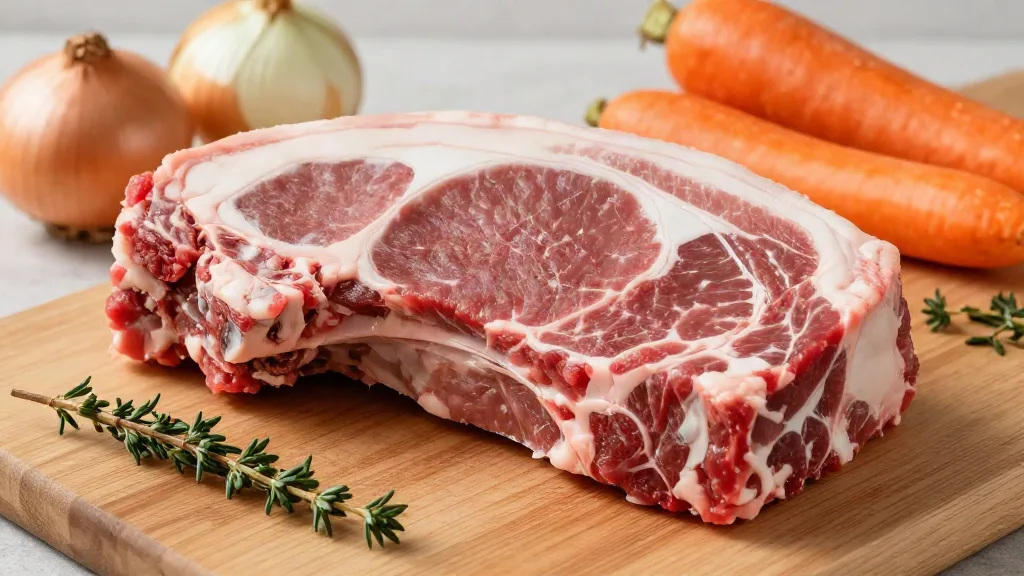
Chuck Roast
The classic pot roast cut. Chuck roast is marbled with fat and threaded with connective tissue, which makes it tough if cooked quickly and wonderfully tender when braised. It has a deep, beefy flavor that leaner roasts can’t match.
How to cook it: Brown it well, then braise it in a covered pot with liquid at about 300°F for 3 to 4 hours, until a fork slides in with no resistance. Don’t worry about the internal temperature passing “well-done”; for a braise, the target is tenderness, which usually happens around 195–205°F.
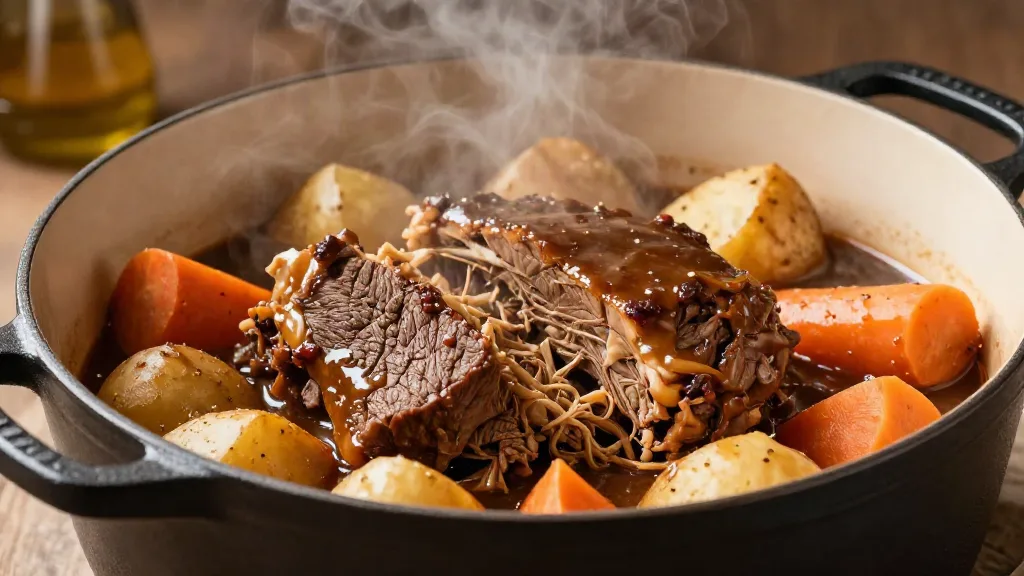
Flat Iron Steak
The flat iron is one of beef’s great success stories. It comes from the top blade muscle, which has a thick, tough sheet of connective tissue running down its center. For a long time it was sold as a roast or ground up. Then meat scientists at the University of Nebraska–Lincoln and the University of Florida analyzed more than 5,500 chuck and round muscles and found ways to cut them into new, more valuable products. The flat iron, cut by removing that central sinew, became the best known.
It’s tender, well-marbled and affordable.
How to cook it: Sear or grill it hot and fast to medium-rare, rest it, then slice it across the grain.
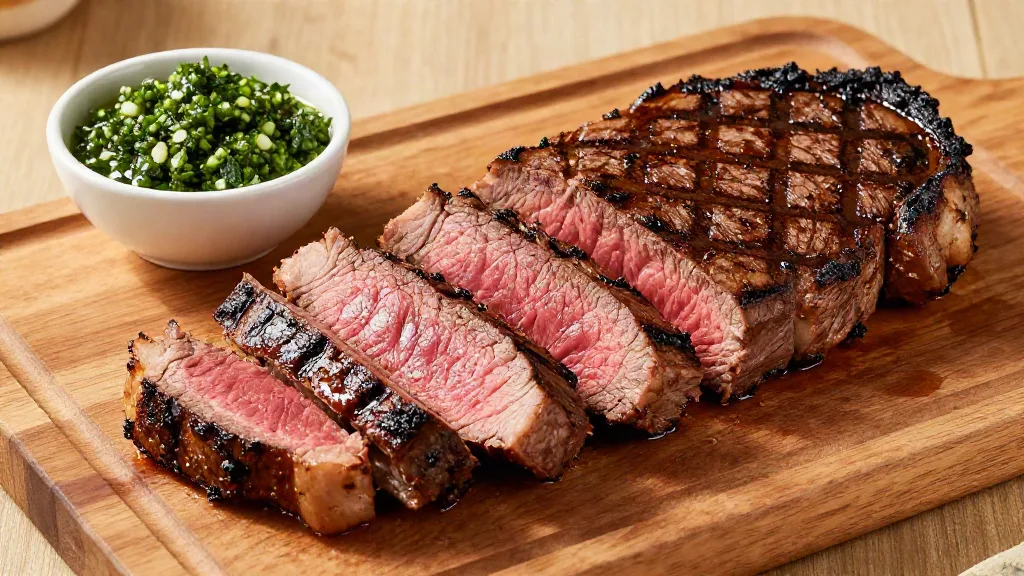
Chuck Eye Steak
Sometimes called the “poor man’s ribeye,” the chuck eye comes from the part of the chuck right next to the rib section. It shares some of the ribeye’s flavor and marbling, but it’s less consistent and can be chewy.
How to cook it: Treat it like a thinner ribeye. Cook it hot and fast to medium-rare to medium, and slice it thinly.
Short Ribs
Short ribs come from the lower part of the ribs, in the chuck, rib and plate areas. They’re layered with fat and connective tissue, and they’re one of the most rewarding cuts to braise.
How to cook them: Braise them in wine or stock at about 300°F for 2½ to 3½ hours. Thin, cross-cut “flanken” short ribs are the exception: they’re best marinated and grilled quickly, Korean-style.
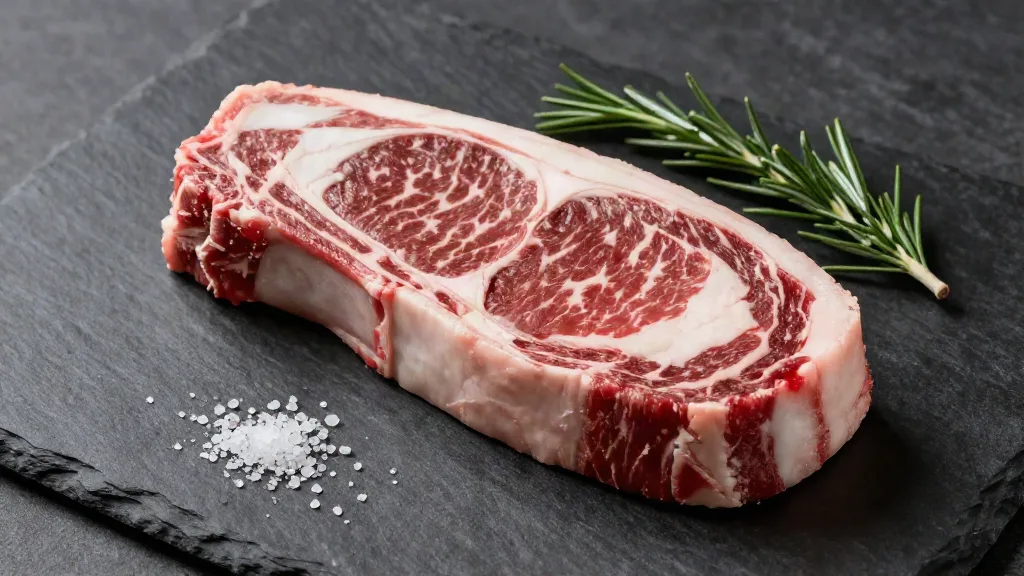
Petite Tender and Denver Steak
The petite tender (teres major) is a small, tenderloin-shaped muscle from the shoulder, and it ranks among the most tender in the Nebraska study. The Denver steak, from the underblade, is another well-marbled steak from the chuck. Both are less common, but well worth asking a butcher about.
AVOID THIS: Don’t buy a package labeled “chuck steak” or “7-bone steak” expecting a grilling steak. Unless it’s specifically a flat iron, chuck eye or Denver steak, it’s usually a slice of the roast, full of connective tissue, and it’s best braised.
The Rib
The rib section is small, about 9% of the carcass, but it produces some of the most prized cuts on the animal. The muscles here do little work, and they’re well-marbled with fat.
Ribeye Steak
The ribeye is my favorite steak for pan-searing. It’s rich, juicy and forgiving, because its marbling bastes the meat as it cooks. A ribeye has two main parts: the eye, the large central muscle, and the cap, the crescent-shaped muscle around the outside. The cap (spinalis dorsi) is one of the most tender and flavorful muscles on the whole animal, according to the Nebraska ranking.
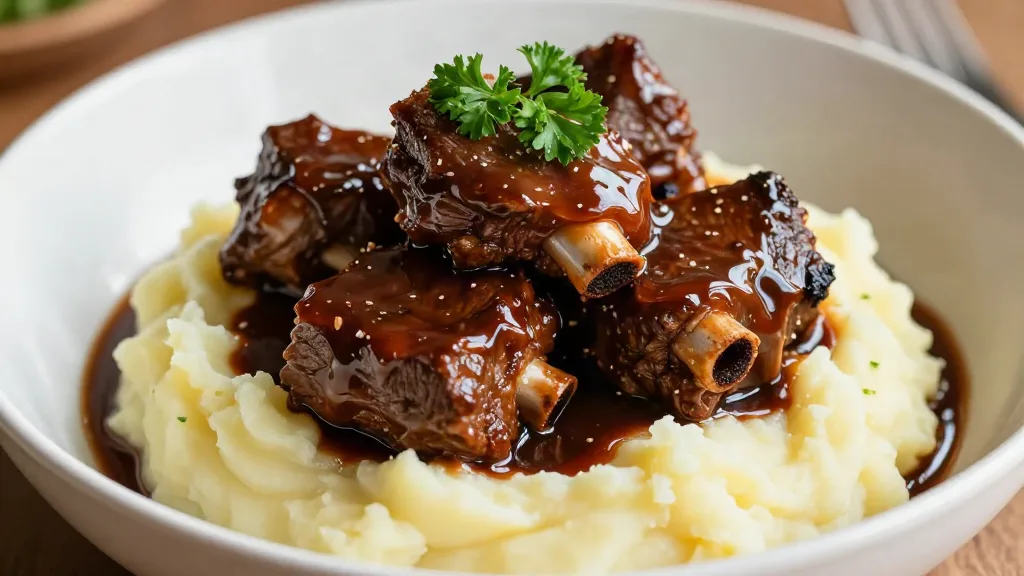
How to cook it: Pan-sear, grill or reverse sear. Medium-rare to medium is ideal. The extra heat at medium helps render the fat. My full how to cook steak guide covers every method in detail.
Bone-In vs. Boneless Ribeye
A bone-in ribeye, sometimes called a cowboy steak or a tomahawk when the long bone is left on, looks spectacular. The bone doesn’t add as much flavor as many people think, but it does insulate the meat next to it, so that part cooks a little more slowly. Boneless ribeyes cook more evenly and are easier to sear flat.
Prime Rib (Standing Rib Roast)
When the rib section is left whole as a roast, you get prime rib, also called a standing rib roast. The name “prime rib” refers to the cut, not necessarily the USDA grade. Many prime ribs are actually Choice grade.
How to cook it: Roast it low, at about 250°F, until the center is about 10 degrees below your target, then crank the oven to 500°F to brown the outside. This is the reverse sear, applied to a roast. For medium-rare, pull it at about 120°F and let carryover take it to 125–130°F. My guide on roasting prime rib walks through it step by step.
Back Ribs
Beef back ribs are the bones left over when ribeyes are cut boneless. They have less meat than short ribs, mostly between the bones, but they’re great smoked or braised.
The Loin: Short Loin and Sirloin
The loin runs along the back behind the rib, and it produces the most tender and most expensive steaks. It makes up about 16% of the carcass and is usually divided into the short loin and the sirloin.
New York Strip
The strip steak, also called top loin, Kansas City strip or New York strip, comes from the short loin. It’s leaner than a ribeye, with a firmer texture and a bold, beefy flavor. Its even shape makes it one of the easiest steaks to cook evenly.
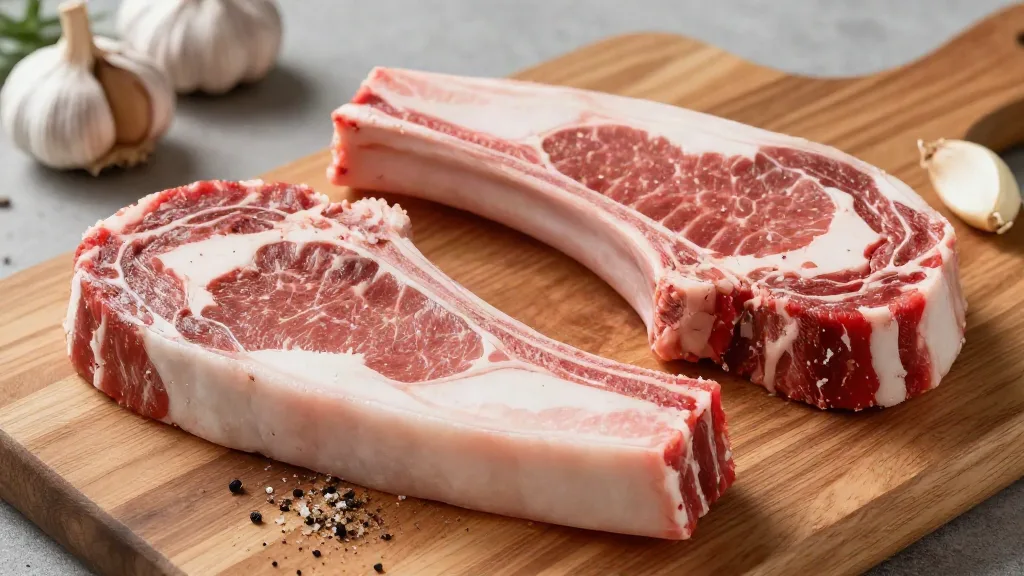
How to cook it: Pan-sear or grill to medium-rare. Render the fat strip along the edge by holding it against the pan with tongs for a minute.
Tenderloin and Filet Mignon
The tenderloin is a long, narrow muscle that runs beneath the spine. It does almost no work, so it’s the most tender cut of beef. It’s also very lean, with a mild flavor. Filet mignon steaks are cut from the tenderloin.
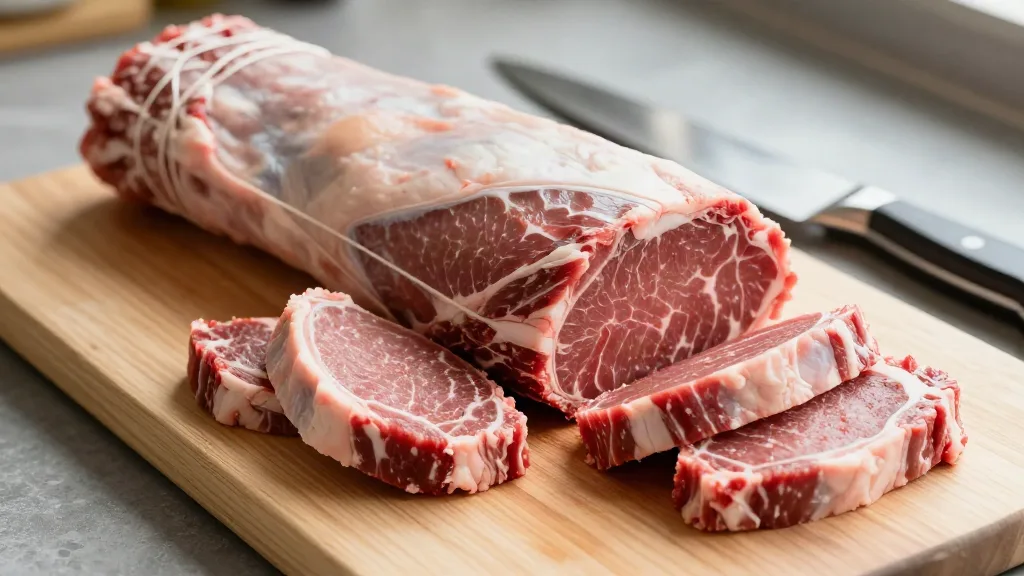
How to cook it: Sear filets hot and fast to medium-rare. Because they’re so lean, they dry out quickly past medium. A whole tenderloin roasts beautifully at 425°F to an internal temperature of about 125°F, which takes about 30 to 40 minutes.
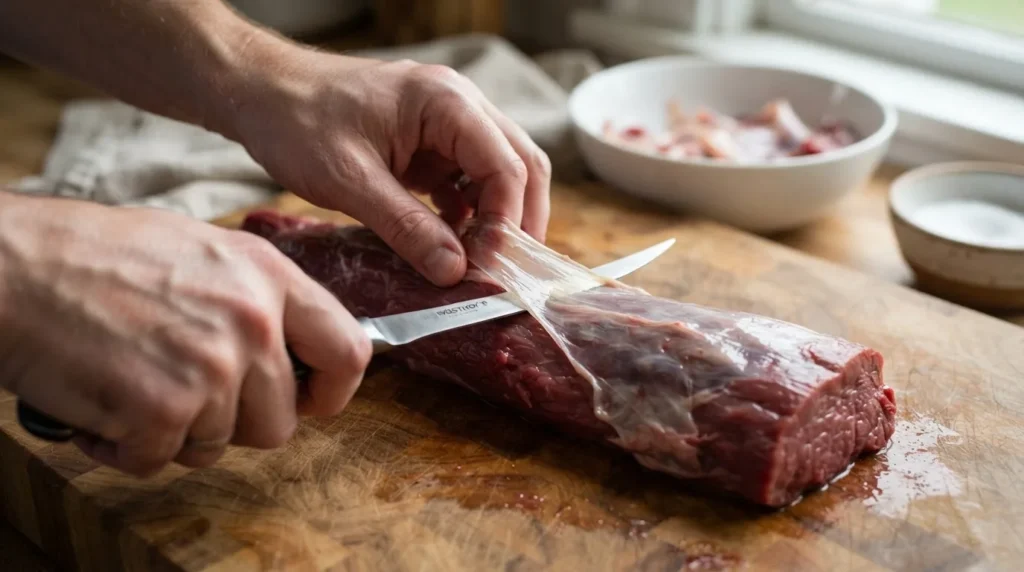
Whole, untrimmed tenderloins are much cheaper per pound than cut filets. You’ll need to remove the fat and the silverskin, a thin, tough, shiny membrane, with a thin knife.
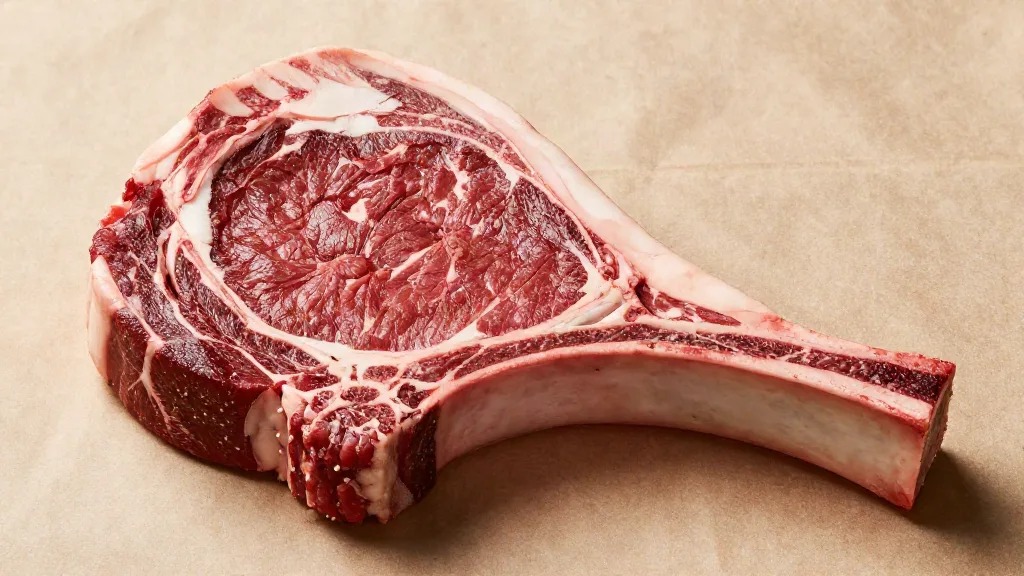
T-Bone and Porterhouse
These steaks include both a strip and a piece of tenderloin, separated by a T-shaped bone. The difference is size. A porterhouse is cut from the rear of the short loin, where the tenderloin is larger.
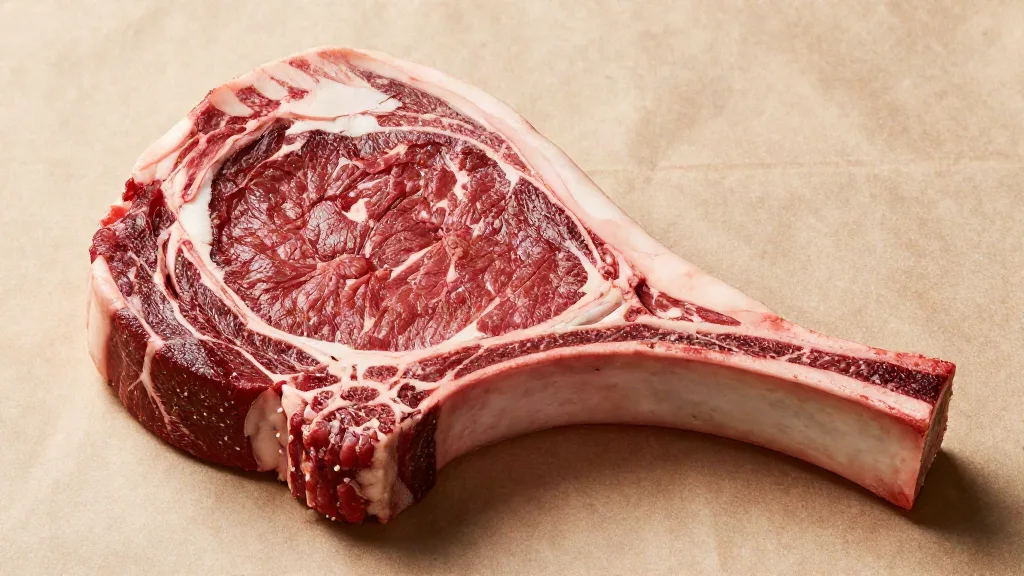
How to cook them: The tenderloin side cooks faster than the strip side, so keep the tenderloin away from the hottest part of the pan or grill. Check the temperature on both sides.
Top Sirloin and Tri-Tip
The sirloin sits behind the short loin, toward the hip. Top sirloin is a lean, affordable steak with good flavor, a little firmer than strip. Tri-tip is a triangular roast from the bottom sirloin, made famous by California’s Santa Maria barbecue tradition.
How to cook them: Grill or sear top sirloin to medium-rare. Grill tri-tip over two heat zones or reverse sear it, then slice it carefully across the grain. The grain changes direction partway through the roast, so cut it in two where the grain shifts and slice each half separately.
METHOD TIP: If you’re on a budget but want a tender steak, top sirloin is the best value in the loin. Cook it to medium-rare at most, and slice it thinly.
The Round (Hind Leg)
The round is the hind leg, about 22% of the carcass. It’s very lean and fairly firm, and it’s where most budget roasts and “London broil” come from. These cuts can be excellent, but they’re easy to ruin because they have so little fat to protect them.
Top Round
The most tender part of the round. Top round is often sold as London broil, a thick steak meant to be marinated, broiled or grilled, and sliced thinly. It also makes great homemade roast beef for sandwiches.
How to cook it: Marinate it, then cook it hot and fast to medium-rare at most. Slice it very thinly across the grain.
Eye of Round
A long, uniform, very lean roast. It looks like a tenderloin, but it’s much firmer and needs careful cooking.
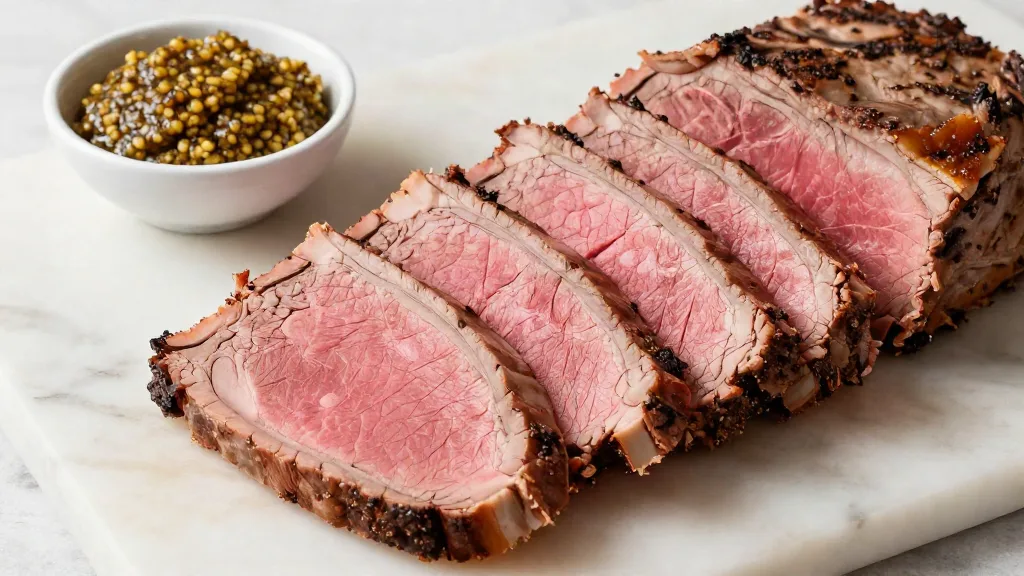
How to cook it: Roast it low, at about 225–250°F, to medium-rare, then slice it as thinly as you can. Cooked past medium, it becomes dry and tough. It’s my favorite cut for homemade deli-style roast beef.
Bottom Round and Rump Roast
Tougher and coarser than the top round. These are best braised for pot roast, cut into stew meat, or roasted low and sliced very thin.
AVOID THIS: Don’t roast a lean round cut to well-done. Without fat or much collagen, it goes from tender to dry quickly. Either keep it at medium-rare and slice it thin, or braise it until it’s fully tender.
Brisket, Plate and Flank
The underside of the animal, about 19% of the carcass, gives us some of the most flavorful cuts of all, and some of the most misunderstood.
Brisket
The brisket comes from the chest, under the first five ribs. Those muscles support much of the animal’s weight, so they’re loaded with tough, cross-linked collagen. A whole brisket, called a “packer,” has two parts: the lean flat and the fattier point.
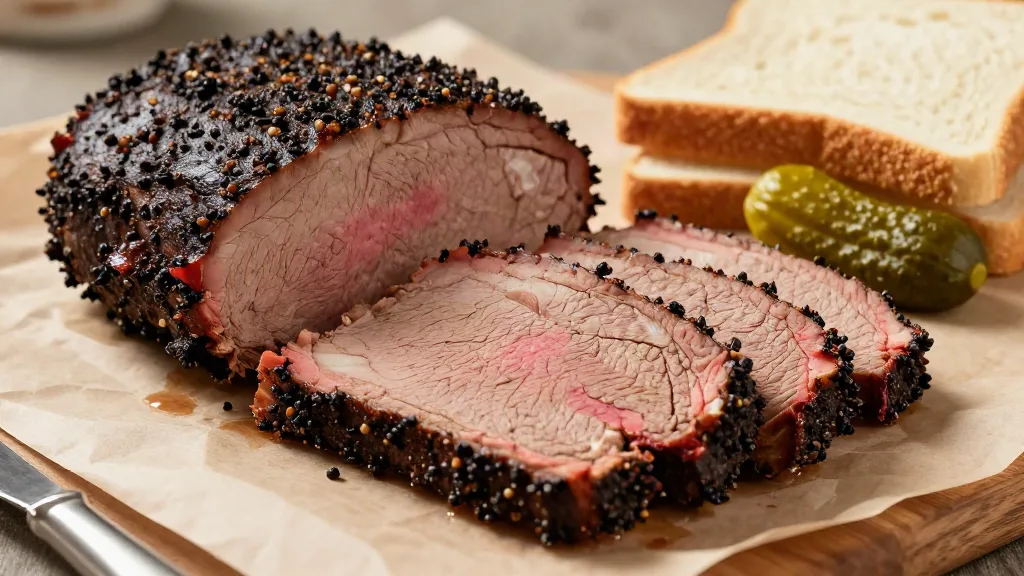
How to cook it: Smoke it at 225–275°F or braise it, covered, for many hours, until it’s probe-tender, usually around 200–205°F. A whole brisket can take 10 to 14 hours on a smoker. Partway through, the temperature may stall, sitting at the same reading for hours as moisture evaporates from the surface. That’s normal. My guide on smoking brisket explains how to get through it.
Short Plate: Skirt Steak and Short Ribs
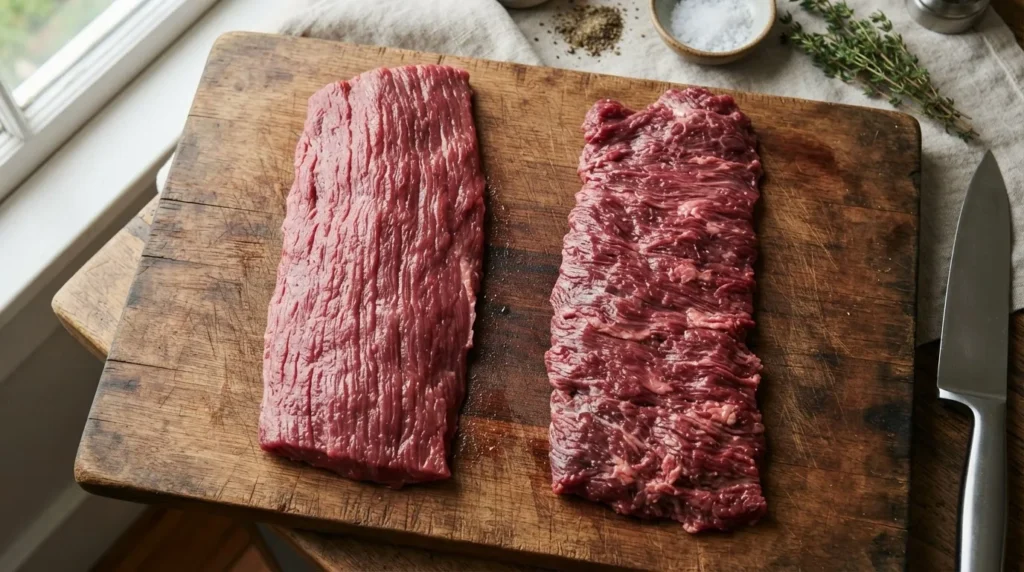
The short plate sits below the rib section. It gives us the outside skirt steak, a long, thin, loose-grained steak with intense flavor, and the plate short ribs, the meatiest short ribs for smoking.
How to cook skirt steak: Over the highest heat you can manage, for just 2 to 4 minutes per side. Cut it into sections, then slice each section across the grain.
Flank Steak
The flank is a wide, flat, lean muscle from the belly. It has a pronounced, lengthwise grain and lots of beefy flavor.
How to cook it: Marinate it if you like, grill or broil it hot and fast to medium-rare, rest it, and slice it thinly across the grain.
Hanger Steak
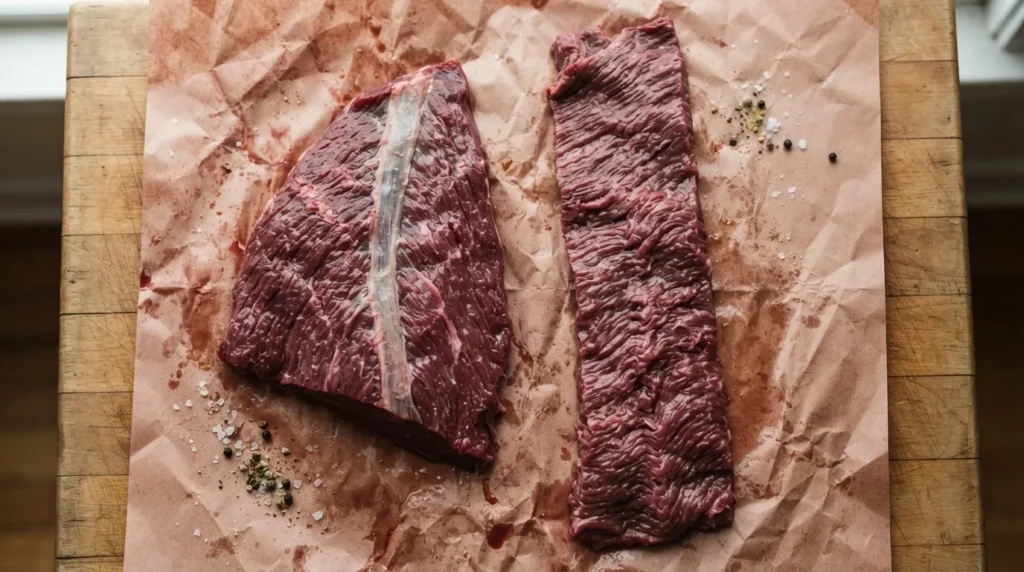
The hanger “hangs” from the diaphragm between the rib and the loin. There’s only one per animal, which is why it was once called the “butcher’s steak,” the cut butchers kept for themselves. It’s rich and tender, with a loose texture and a tough sinew running down the middle.
How to cook it: Remove the center sinew to create two long pieces. Sear them hot to medium-rare, then slice across the grain.
Why Slicing Matters So Much Here
Flank, skirt and hanger steaks have long, coarse muscle fibers. Slicing across them makes a dramatic difference. In testing by America’s Test Kitchen, flank steak sliced with the grain took more than four times as much force to bite through as the same steak sliced against it. My how to cook steak guide shows exactly how to find the grain and slice it.
Understanding USDA Beef Grades
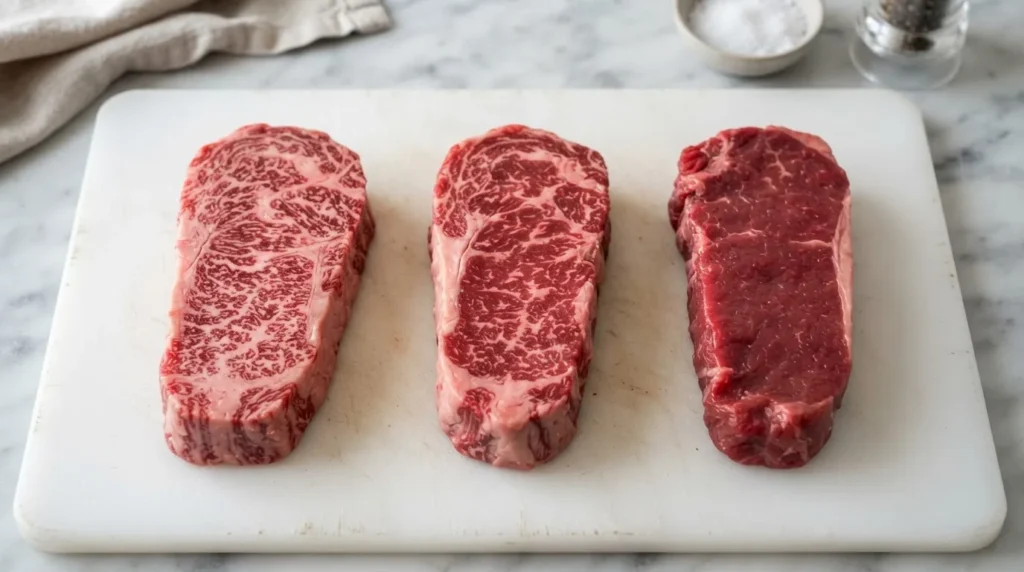
Most beef in American supermarkets carries a USDA quality grade. The grade is mostly about marbling, the fine streaks of fat inside the muscle.
According to the USDA Agricultural Marketing Service:
| Grade | Marbling | Where you’ll find it | Best for |
|---|---|---|---|
| Prime | Slightly abundant to abundant | Mostly restaurants and specialty butchers | High-heat methods: grilling, broiling, roasting |
| Choice | Moderate | Most supermarkets | Most high-heat cooking for rib and loin cuts; braising for round cuts |
| Select | Slight | Some supermarkets, often as store brands | Marinating, slow or moist-heat cooking |
How Much Does Grade Matter?
It matters most for cuts you cook hot and fast. A Prime ribeye or strip has more margin for error, because the extra fat keeps it juicy if it runs a little past medium-rare. For braises and pot roasts, the grade matters much less, because long cooking makes even Select cuts tender.
Some cuts are tender regardless of grade. The tenderloin and flat iron, for example, are naturally tender because of where they come from on the animal.
METHOD TIP: When grades aren’t labeled, look at the meat itself. Thin, evenly distributed white streaks of marbling through the red muscle are what you want. Thick seams of fat between muscles don’t count; they won’t make the meat more tender.
Dry-Aged, Wet-Aged and Other Labels
Beyond the cut and the grade, you’ll see a few other labels at the counter. Here’s what they actually mean.
Dry-Aged vs. Wet-Aged Beef
Almost all beef is aged for some time after slaughter, which allows natural enzymes to tenderize the meat.
- Wet-aged beef is aged in vacuum-sealed bags. This is how most supermarket beef is handled.
- Dry-aged beef is aged uncovered in a carefully controlled, refrigerated room. It loses moisture and develops a deeper, nutty flavor, and the dried outer surface has to be trimmed away.
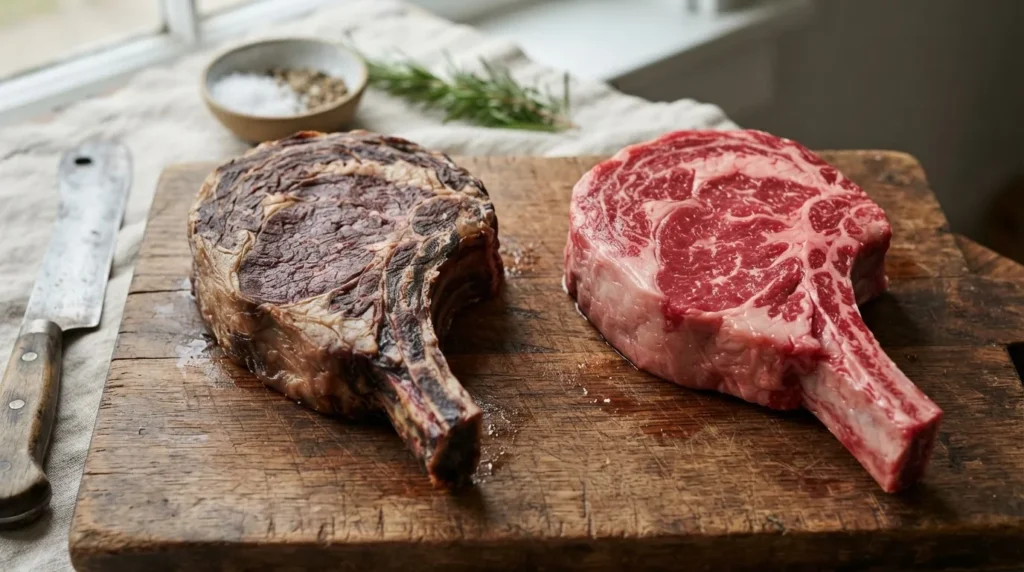
Dry-aged beef is often sold as more tender, but the evidence doesn’t support that. A University of Nevada, Reno Extension study found that “dry aging beef does not improve tenderness when compared to wet aging,” and that dry aging to 42 days increased shrinkage by up to 9.66%, with more lost to trimming. Longer aging did improve tenderness for both methods. So if you buy dry-aged beef, buy it for the flavor, and understand that its higher price partly reflects the weight lost during aging.
Mechanically Tenderized Beef
Some cheaper steaks and roasts are run through a machine with small blades or needles to break down the muscle fibers. This can push bacteria from the surface into the center of the meat. Since 2016, USDA rules have required these products to be labeled “mechanically tenderized,” “blade tenderized” or “needle tenderized,” with cooking instructions, as Meatingplace reported.
The label instructs you to cook these cuts to at least 145°F and rest them for 3 minutes, so don’t cook them rare or medium-rare.
Grass-Fed and Grain-Finished
Most American beef is grain-finished, meaning the cattle spend the last months before slaughter eating grain, which increases marbling. Grass-fed beef is usually leaner, with a more mineral, earthy flavor. Because it has less fat, cook grass-fed steaks a little less, and check the temperature earlier.
Ground Beef
Ground beef is the most popular beef product in the country, and choosing the right blend makes a real difference.
What the Labels Mean
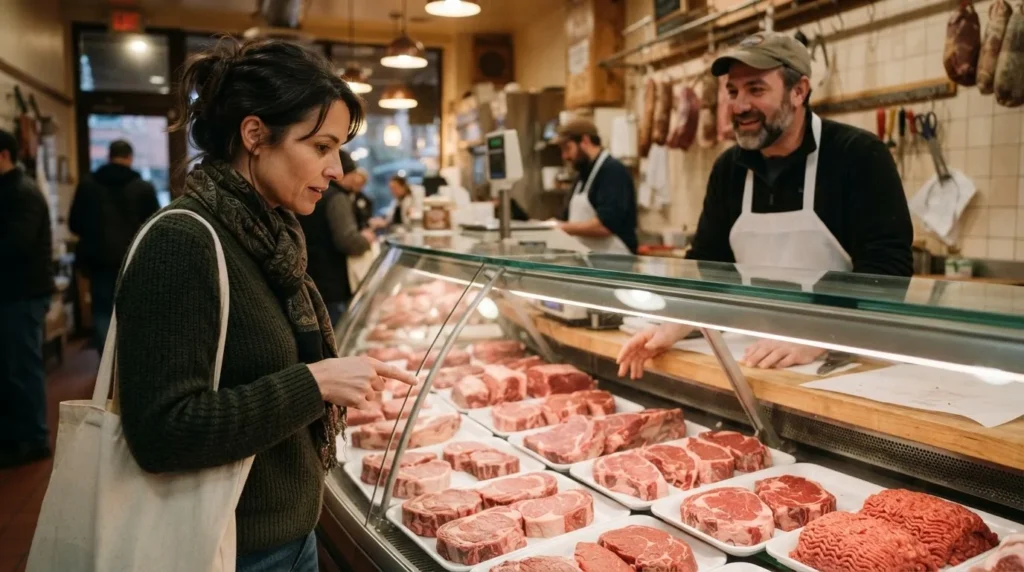
According to the USDA Food Safety and Inspection Service, both “ground beef” and “hamburger” can contain up to 30% fat. The difference is that beef fat can be added to hamburger but not to ground beef. Neither can contain added water, phosphates, extenders or binders.
The ratio on the label, like 80/20, tells you the percentage of lean meat to fat:
| Blend | Best for |
|---|---|
| 70/30 to 75/25 | Rich burgers on the grill, where a lot of fat drips away |
| 80/20 | Juicy burgers and meatballs. My default for burgers |
| 85/15 to 90/10 | Tacos, chili, pasta sauces and casseroles |
| 93/7 and leaner | Recipes where you’ll drain no fat, or where other ingredients add moisture |
Where Ground Beef Comes From
Ground beef is usually made from trimmings, and also from chuck and round. “Ground chuck” is typically around 80/20, while “ground round” and “ground sirloin” are leaner.
Always Cook Ground Beef to 160°F
Grinding mixes any bacteria from the surface of the meat throughout the whole batch. That’s why ground beef must reach 160°F, measured with a thermometer, even if you like your steaks rare. My meat internal temperature guide explains why color isn’t a reliable test for burgers.
How to Buy Beef Like a Pro
Questions to Ask the Butcher
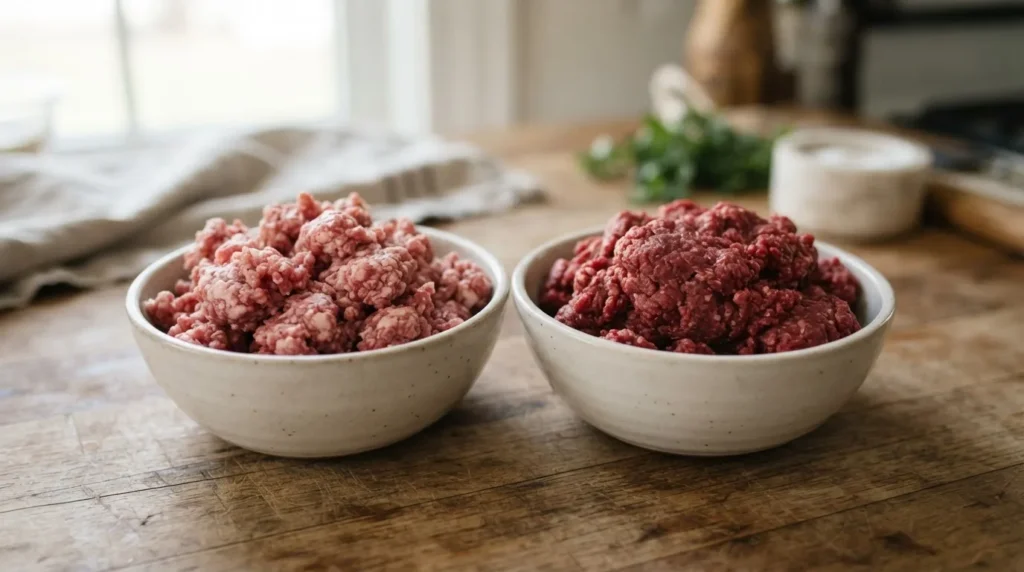
A good butcher is one of the best resources a home cook can have. Here’s what I ask:
- “Can you cut it thicker?” For steaks, 1 to 1½ inches is ideal. Most butchers will cut to order.
- “What’s good today?” Butchers know which cuts are best and best value at any given time.
- “What’s the grade?” If the label doesn’t say, ask.
- “Do you have flat iron, Denver or petite tender?” These value cuts are often available even when they’re not on display.
- “Can you trim it or tie it for me?” Most butchers will trim a tenderloin, tie a roast or remove the sinew from a hanger at no extra cost.
What to Look For in the Case
- Color: Fresh beef is bright cherry red on the surface, and darker purplish-red inside or in vacuum packs. That’s normal, as beef turns red when exposed to air. Brown or gray spots on the surface can simply mean the meat has been exposed to air for longer, but combined with a sour smell or sticky texture, they’re a sign to pass.
- Marbling: Look for fine, even streaks of white fat through the muscle.
- Thickness: Choose steaks that are the same thickness from edge to edge, so they cook evenly.
- Packaging: Avoid packs with a lot of liquid pooled in the tray.
Getting the Best Value
| If you love… | Try this cheaper alternative |
|---|---|
| Ribeye | Chuck eye steak or Denver steak |
| Filet mignon | Petite tender or flat iron |
| Strip steak | Top sirloin |
| Prime rib | Chuck roll or chuck eye roast, reverse-seared |
| Short ribs | Chuck roast cut into thick pieces and braised |
My guide to the best budget steak cuts goes deeper into getting steakhouse results without steakhouse prices.
Matching the Cut to the Cooking Method
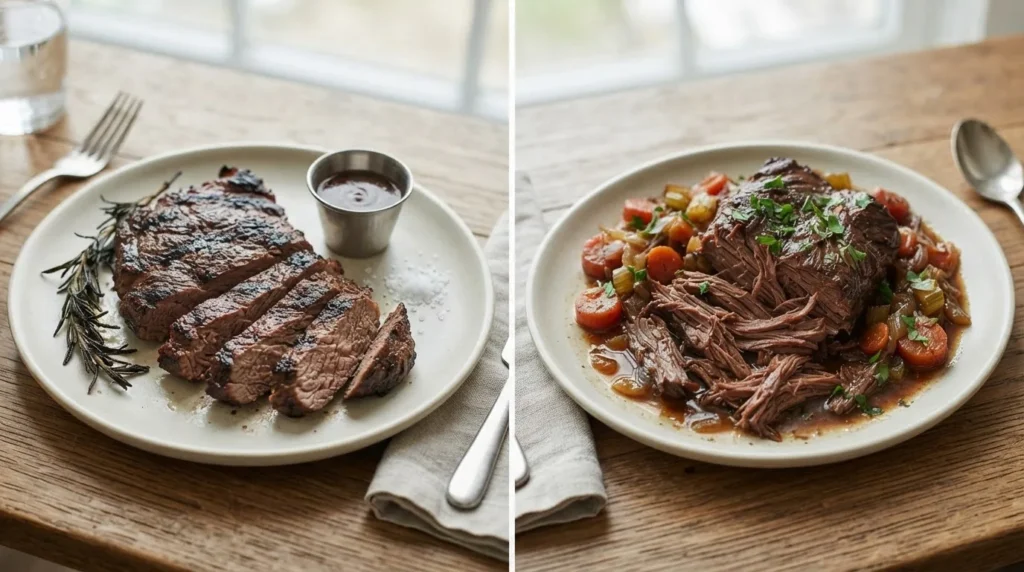
This is where everything comes together. Almost every disappointing beef dinner comes from using the right cut with the wrong method.
Hot and Fast: Searing, Grilling and Broiling
For: Ribeye, strip, filet, T-bone, porterhouse, top sirloin, flat iron, flank, skirt, hanger.
These cuts are tender already. Your job is to build a great crust and stop at the right temperature. Medium-rare to medium is the sweet spot for most of them. My how to cook steak guide covers pan-searing, the reverse sear and grilling in detail.
Low and Slow, Dry: Roasting and Smoking
For: Prime rib, tenderloin roast, eye of round, top round, tri-tip, brisket, beef ribs.
Lean roasts like eye of round and top round should be roasted low and pulled at medium-rare. Collagen-rich cuts like brisket and beef ribs are smoked or roasted for many hours until they’re probe-tender.
Low and Slow, Moist: Braising and Stewing
For: Chuck roast, short ribs, brisket, shank, bottom round, stew meat.
Braising means searing the meat, then cooking it partly covered in liquid at a low temperature for hours. The moist heat helps convert collagen into gelatin, turning tough cuts into tender, rich ones. See my guide on braising beef for the full method.
Troubleshooting Common Beef Problems
My Steak Was Tough and Chewy
Likely causes:
- The cut needed a different method. A chuck or round steak cooked hot and fast stays tough.
- It was overcooked. Lean cuts like sirloin, flank and round toughen quickly past medium.
- It was sliced with the grain. Coarse-grained steaks need to be sliced across the fibers.
Fix it next time: Check which primal the cut comes from, cook tender cuts to medium-rare, and slice across the grain.
My Pot Roast Was Dry and Stringy
This usually means it was cooked too hot, or not long enough. Collagen needs time to break down. A pot roast pulled too early is tough, and one boiled hard is dry and stringy even when it’s technically done.
Fix it next time: Braise it gently, at about 300°F in the oven or at a bare simmer on the stove, and keep going until a fork slides in with no resistance. If it’s still tough, it needs more time, not less.
My Brisket Was Dry
Usually caused by slicing the lean flat too early, or by cooking it too hot.
Fix it next time: Cook it until it’s probe-tender, not just to a number. Rest it, wrapped, for at least an hour before slicing, and slice it across the grain just before serving.
My Expensive Steak Was Bland
Lean cuts, and some grass-fed beef, need help with flavor.
Fix it next time: Salt the steak well, ideally a day ahead. Choose a well-marbled cut like ribeye, or a Prime or upper Choice grade, if flavor is your priority. Finish lean cuts with butter, a pan sauce or chimichurri.
TROUBLESHOOTING FLOWCHART:
- Tough steak → wrong cut for the method, overcooked, or sliced with the grain → match the method to the cut, pull earlier, slice across.
- Tough pot roast → not cooked long enough → keep braising until fork-tender.
- Dry, stringy roast → cooked too hot → lower the heat and keep it at a gentle simmer.
- Dry brisket → sliced too soon or cooked too hot → cook to probe-tender and rest at least an hour.
- Bland steak → under-seasoned or very lean → salt ahead, pick a more marbled cut.
Your Path to Knowing Beef
Key Takeaways
- Tenderness depends on how hard a muscle worked. Back muscles are tender; legs, shoulders and chest are tough.
- Match the cut to the method. Tender cuts go hot and fast; tough cuts go low and slow.
- Grade is mostly about marbling, and it matters most for steaks cooked quickly.
- Ground beef always goes to 160°F, and so do mechanically tenderized cuts to at least 145°F with a rest.
- Value cuts exist in every primal. Flat iron, petite tender, chuck eye and top sirloin are all worth knowing.
Your 30-Day Beef Plan
Week 1: Learn the tender cuts. Pan-sear a ribeye and a strip steak side by side. Compare the flavor, texture and fat.
Week 2: Try a value steak. Cook a flat iron or top sirloin to medium-rare, rest it, and slice it across the grain. Compare it with last week’s steaks.
Week 3: Master a braise. Make a chuck roast or short ribs. Cook them until a fork slides in without resistance, and note how long it took.
Week 4: Take on a roast. Roast an eye of round or tri-tip to medium-rare and slice it thinly, or, if you’re ready, smoke a brisket flat.
Frequently Asked Questions
What is the most tender cut of beef?
The tenderloin is the most tender cut of beef, and filet mignon steaks are cut from it. It’s a long, narrow muscle that runs beneath the spine and does almost no work, so it has very little connective tissue. In a tenderness ranking by University of Nebraska meat scientists, the tenderloin (psoas major) measured as the most tender muscle. Other very tender muscles include the top blade, which is where the flat iron steak comes from, the rib cap on a ribeye, and the petite tender from the shoulder. The tenderloin is also very lean, so it’s easy to overcook. Keep it at medium-rare.
What is the most flavorful cut of beef?
Flavor comes mostly from fat and from muscles that work harder. That’s why well-marbled cuts like the ribeye are often considered the most flavorful steaks, and why the rib cap, the outer ring of the ribeye, is especially prized. Hard-working cuts like skirt steak, hanger steak and chuck also have a deep, beefy flavor, though they need the right cooking method to be tender. The tenderloin, by contrast, is very tender but mild. If flavor is your top priority, choose a well-marbled ribeye, a skirt steak or a slowly braised chuck roast.
What’s the difference between chuck and brisket?
Both are tough, collagen-rich cuts from the front of the animal, but they come from different places. Chuck comes from the shoulder and is made of many different muscles with fat running through them. Brisket comes from the chest, below the chuck. Its muscles support much of the animal’s weight, so they contain more of the tough, cross-linked collagen that takes a long time to break down. As a result, brisket usually needs about twice as long to become tender. Chuck is ideal for pot roast and stew; brisket is ideal for smoking or a long braise.
Is Prime beef worth the extra money?
It depends on the cut and the cooking method. Prime beef has the most marbling, which makes it juicier and more forgiving, especially for steaks cooked hot and fast like ribeye and strip. If you’re grilling or searing a special-occasion steak, Prime can be worth it. For braises, pot roasts and stews, it’s not worth the extra cost, because long, slow cooking makes even Choice and Select cuts tender. A well-marbled Choice steak, cooked carefully to medium-rare, can be excellent and costs much less.
What does “against the grain” mean?
The grain is the direction the muscle fibers run through a piece of meat. On steaks like flank, skirt and hanger, you can see the fibers as long, parallel lines. Slicing against the grain means cutting across those lines, so each slice contains short pieces of fiber that are easy to chew. Slicing with the grain leaves long, tough strands. America’s Test Kitchen found that flank steak sliced with the grain needed more than four times as much force to bite through. It matters most for coarse-grained cuts, but slicing across the grain improves every steak and roast.
What is the best cheap steak?
My favorites are the flat iron, top sirloin and chuck eye. The flat iron, from the shoulder, is one of the most tender muscles on the animal, according to University of Nebraska research, and it costs far less than a filet. Top sirloin is lean and flavorful, and works well grilled or seared to medium-rare. The chuck eye, cut from right next to the rib section, has some of the ribeye’s flavor and marbling at a lower price. Flank and skirt steaks are also great value when marinated, cooked hot and fast, and sliced thinly across the grain.
Why is my pot roast tough?
Almost always because it hasn’t cooked long enough. Chuck roast and other braising cuts are full of collagen, which only softens after hours of gentle, moist heat. Partway through cooking, a pot roast can actually be tougher than when it started, because the muscle fibers tighten before the collagen breaks down. Keep cooking it at a gentle simmer, around 300°F in the oven, until a fork slides in with almost no resistance. That usually takes 3 to 4 hours for a 3- to 4-pound roast. Cooking too hot can make it dry and stringy, so keep it gentle.
Is dry-aged beef more tender?
Not according to the research I’ve found. A University of Nevada, Reno Extension study found that dry aging did not improve tenderness compared with wet aging, the vacuum-bag aging most supermarket beef goes through. Longer aging did improve tenderness for both methods. Where dry aging does make a difference is flavor: it concentrates the beef and develops a nutty, rich taste that many people love. It also loses weight during aging and needs extra trimming, which is part of why it’s so expensive. Buy dry-aged beef for its flavor, not its tenderness.
What is a London broil?
London broil isn’t a specific cut. It’s a cooking method and a label used for thick, lean steaks, most often top round, though flank steak was traditionally used too. The meat is usually marinated, then broiled or grilled hot and fast to medium-rare, and sliced very thinly across the grain. Because these cuts are lean and firm, they become tough if overcooked or sliced thick. Treat a London broil like a flank steak: marinate it for a few hours, cook it hot, keep it at medium-rare, rest it, and slice it as thinly as possible across the grain.
What should I look for when buying beef?
Look for bright red color on the surface, though darker, purplish-red beef in vacuum packs is normal. Choose steaks with fine, even marbling and the same thickness from edge to edge, ideally 1 to 1½ inches for searing. Avoid packages with a lot of liquid in the tray, and any meat with a sour smell or sticky surface. Check the grade if it’s labeled, and look for “mechanically tenderized” on the label, since those cuts must be cooked to at least 145°F. Most importantly, think about how you’ll cook it, and choose the cut to match.
Professional Tips for Buying and Cooking Beef
BUY WHOLE, SAVE MORE: Whole tenderloins, strip loins and briskets cost much less per pound than individual steaks. Trim them yourself, cut your own steaks, and freeze what you don’t need.
READ THE GRAIN BEFORE YOU COOK: Look at the direction of the fibers while the meat is raw. It’s much easier to see before it’s covered in a dark crust.
TEMPERATURE FOR TENDER, TEXTURE FOR TOUGH: Use a target temperature for tender cuts. For braises and smoked cuts, use temperature to tell you you’re close, then test for tenderness with a probe or fork.
KNOW YOUR YIELD: Boneless cuts cost more per pound, but you’re not paying for bone. Compare the price per pound of edible meat, not just the sticker price.
Take Action: Get to Know Your Beef
If you’re just starting: Pick one tender cut, like a strip steak, and cook it with my how to cook steak guide.
If you’re ready for more: Try a value cut like flat iron or top sirloin, and practice slicing across the grain.
If you’re ready for a challenge: Braise a chuck roast or short ribs until they’re fork-tender, or take on a reverse-seared prime rib for the holidays.
Track Your Progress
- Note every cut you cook, where it comes from, the grade and the price per pound.
- Record the method, the pull temperature and how tender it was.
- Compare a premium cut with its budget alternative side by side.
- Ask your butcher about one new cut each time you shop.
That tough, grilled chuck steak taught me the most useful lesson I know about beef: there are no bad cuts, only mismatched methods. Learn where a cut comes from, and you’ll know how to cook it. Next time you’re at the meat counter, try one cut you’ve never cooked before, and send me a message through the contact page to tell me how it turned out.