
How to Thaw a Turkey Safely: Refrigerator, Cold Water and Last-Minute Options
The worst Thanksgiving morning of my life started with me pressing on a turkey that was still rock hard in the middle. I had moved it to the fridge two days earlier, which felt like plenty. It wasn’t. A 20-pound bird needs closer to five days, and I learned that with a house full of hungry people and an oven that was already hot.
If thawing a turkey makes you nervous, you’re in good company. According to Food Safety News, calls to the USDA Meat and Poultry Hotline double every November, largely because of turkey questions, and thawing is one of the most common.
This guide gives you the exact thawing times by weight for every safe method, a Thanksgiving calendar so you know which day to start, and what to do if you’ve run out of time. For the full roasting method, from seasoning to carving, see my complete guide on how to cook a turkey.
Turkey Thawing Times at a Glance
These times come from the USDA’s Turkey Basics: Safe Thawing guide.
| Turkey weight | In the refrigerator | In cold water |
|---|---|---|
| 4 to 12 lb | 1 to 3 days | 2 to 6 hours |
| 12 to 16 lb | 3 to 4 days | 6 to 8 hours |
| 16 to 20 lb | 4 to 5 days | 8 to 10 hours |
| 20 to 24 lb | 5 to 6 days | 10 to 12 hours |
The simple rules behind the table:
- Refrigerator: about 24 hours for every 4 to 5 pounds.
- Cold water: about 30 minutes per pound, changing the water every 30 minutes.
Why You Can’t Thaw a Turkey on the Counter
It seems harmless to leave a frozen turkey on the counter overnight, but it’s one of the riskiest things you can do in the kitchen.
The USDA explains that food between 40°F and 140°F is in the “Danger Zone,” where bacteria multiply quickly. A frozen turkey thaws from the outside in. On the counter, the outer layers of meat warm into the Danger Zone long before the center thaws, and they stay there for hours. The USDA says meat left thawing on the counter for more than 2 hours is not safe, even if the center is still frozen solid.
The same goes for the garage, the porch, the trunk of a car or anywhere else you can’t control the temperature. And according to Food Safety News, hotline staff regularly remind callers that bathtubs, toilets and washing machines are not safe places to thaw or brine a turkey either.
The good news is that there are three safe methods, and one of them requires almost no effort at all.
Method 1: Thawing a Turkey in the Refrigerator
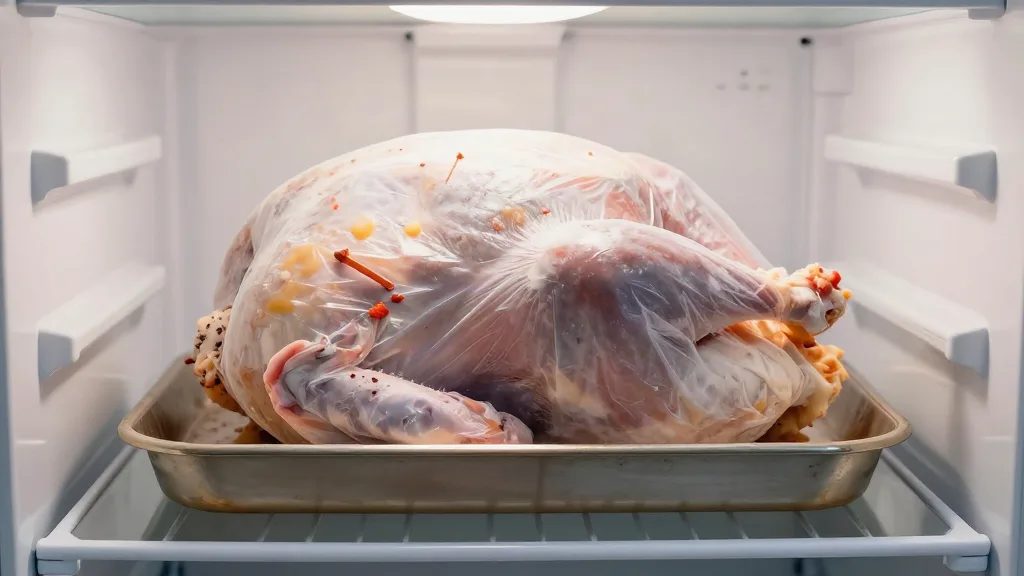
This is the safest and easiest method, and it’s the one I recommend for almost everyone. It just requires planning.
How to Do It
- Leave the turkey in its original wrapping. There’s no need to unwrap it.
- Set it on a rimmed sheet pan or in a roasting pan to catch any juices that leak as it thaws.
- Place it on the lowest shelf of the refrigerator, so it can’t drip onto other food.
- Make sure your refrigerator is at 40°F or below. An inexpensive fridge thermometer is worth having.
- Allow about 24 hours for every 4 to 5 pounds of turkey.
How Long a Thawed Turkey Keeps
Once your turkey is fully thawed in the refrigerator, it can stay there for another 1 to 2 days before cooking, according to the USDA. That gives you a useful buffer. I always aim to have the turkey fully thawed a day before I plan to cook it, so I have time to dry brine it.
Can You Refreeze It?
Yes. A turkey thawed in the refrigerator can be refrozen without cooking it, the USDA says, although the quality may suffer a little. That’s useful if your plans change.
Method tip: Refrigerators run colder at the back and on the lower shelves, so a turkey there may take a little longer to thaw. If you’re cutting it close, check it a day early by pressing on the thickest part of the breast and thigh.
Method 2: Thawing a Turkey in Cold Water
If you’re short on time, cold water thawing is much faster. It takes more attention, but it can thaw a 16-pound turkey in about 8 hours instead of 4 days.
How to Do It
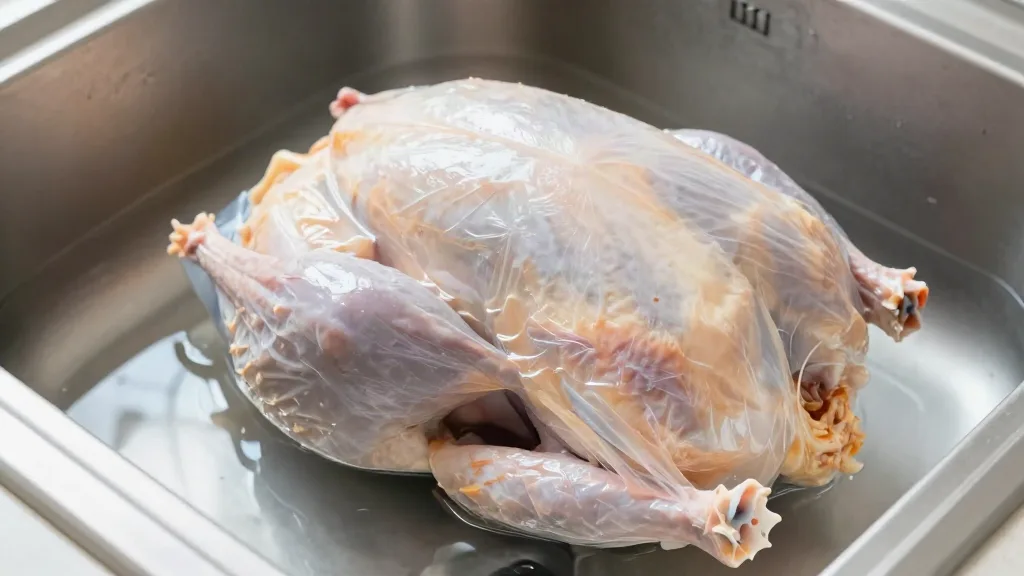
- Make sure the turkey is in a leak-proof bag. If the original wrapping is torn, put the turkey in a large, sturdy plastic bag and seal it well. This keeps water from soaking into the meat and keeps the turkey’s juices out of the water.
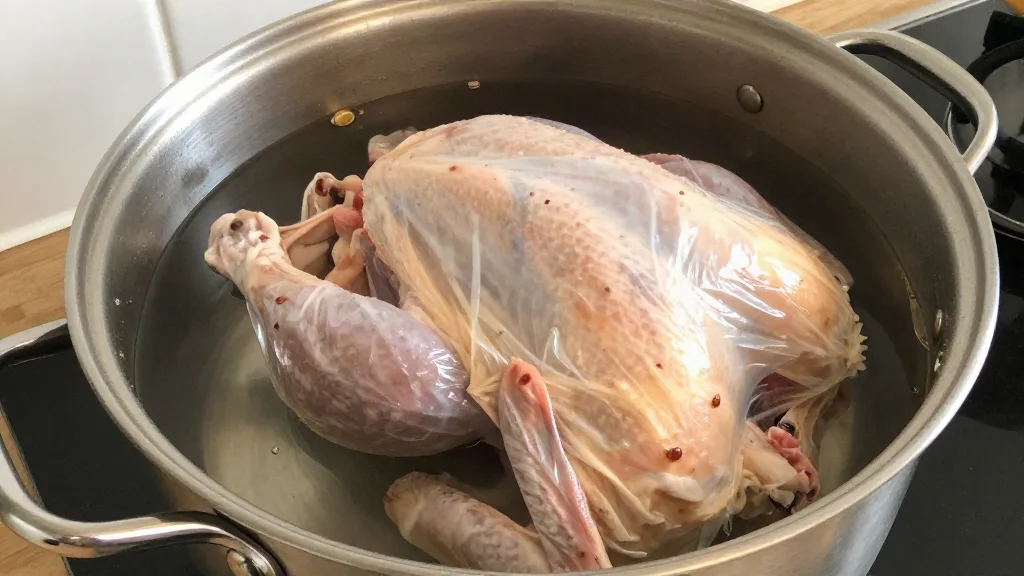
- Submerge the turkey completely in cold tap water. A clean sink, a large stockpot or a clean cooler all work.
- Change the water every 30 minutes, so it stays cold. This is the step people skip, and it’s the one that keeps the turkey safe.
- Allow about 30 minutes per pound.
- Cook the turkey right away once it’s thawed.
Why the Water Must Be Cold
Hot or warm water might seem faster, but it warms the outer layers of the turkey into the Danger Zone while the center is still frozen, exactly like leaving it on the counter. Keep the water cold, and keep changing it.
Can You Refreeze It?
Not raw. A turkey thawed in cold water should be cooked right away. According to the USDA, once it’s cooked, the meat can be frozen.
Avoid this: Don’t leave a turkey in the same water overnight. As the water warms up, the turkey’s surface warms with it. If you can’t commit to changing the water every 30 minutes, use the refrigerator method instead.
Method 3: Thawing a Turkey in the Microwave
Some smaller turkeys can be thawed in a microwave, but it’s the least practical method for most people. Many whole turkeys simply won’t fit.
If you try it, the USDA advises following your microwave manufacturer’s instructions for the size of turkey that will fit and the minutes per pound and power level to use. Remove all outside wrapping first, and place the turkey on a microwave-safe dish to catch any juices.
Cook the turkey immediately after thawing. Microwaves heat unevenly, so some parts of the turkey may have started to cook. The USDA warns against holding partially cooked food, because any bacteria present may not have been destroyed.
Your Thanksgiving Thawing Calendar
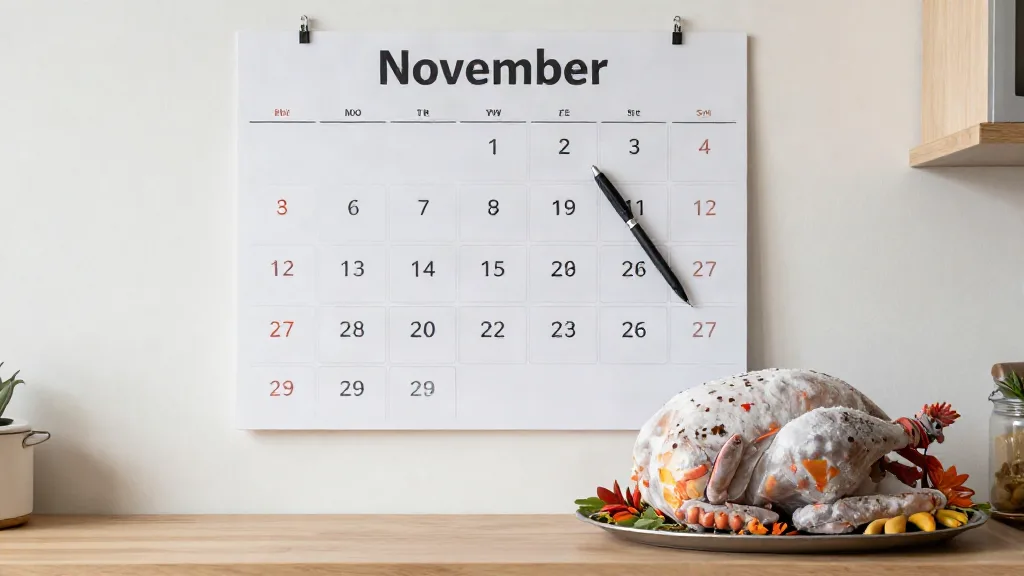
Thanksgiving falls on Thursday, November 26 this year. If you’re thawing in the refrigerator, here’s the day to move your turkey from the freezer to the fridge, based on the USDA’s thawing times. I’ve used the longer end of each range, so a turkey at the lighter end of its weight range may finish a day early. That’s fine, because a thawed turkey keeps in the fridge for 1 to 2 days.
| Turkey weight | Refrigerator time | Move it to the fridge by |
|---|---|---|
| 4 to 12 lb | 1 to 3 days | Monday, November 23 |
| 12 to 16 lb | 3 to 4 days | Sunday, November 22 |
| 16 to 20 lb | 4 to 5 days | Saturday, November 21 |
| 20 to 24 lb | 5 to 6 days | Friday, November 20 |
Check the turkey on Tuesday. If it’s already thawed, that gives you time to dry brine the turkey on Tuesday or Wednesday, which I explain in my guide to dry brining a turkey.
If you’re using the cold water method instead, start early on the day you’ll cook, or the day before if you’ll cook first thing in the morning. A 20-pound turkey needs 10 hours of attention, so plan the water changes around your sleep.
How to Tell if Your Turkey Is Fully Thawed
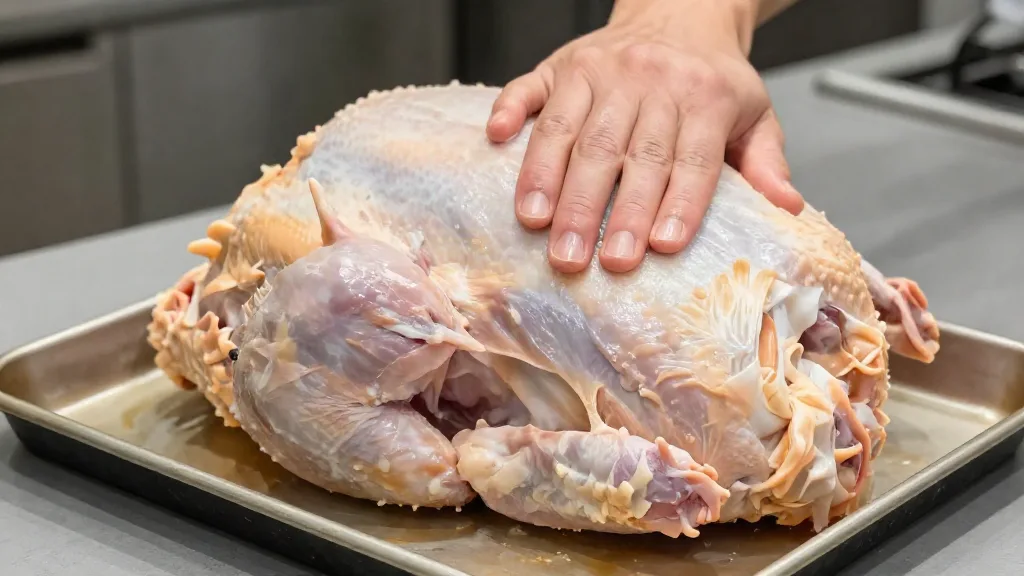
A turkey can feel soft on the outside while the center is still frozen. Here’s how to check:
- Press the thickest parts. The breast and the thighs should feel soft and give when you press, with no hard spots.
- Check the cavity. Reach inside the body cavity. If you feel ice crystals, or the giblet bag is frozen to the inside, the turkey needs more time.
- Wiggle the legs. The legs should move freely at the joints.
Remove the Giblets and Neck
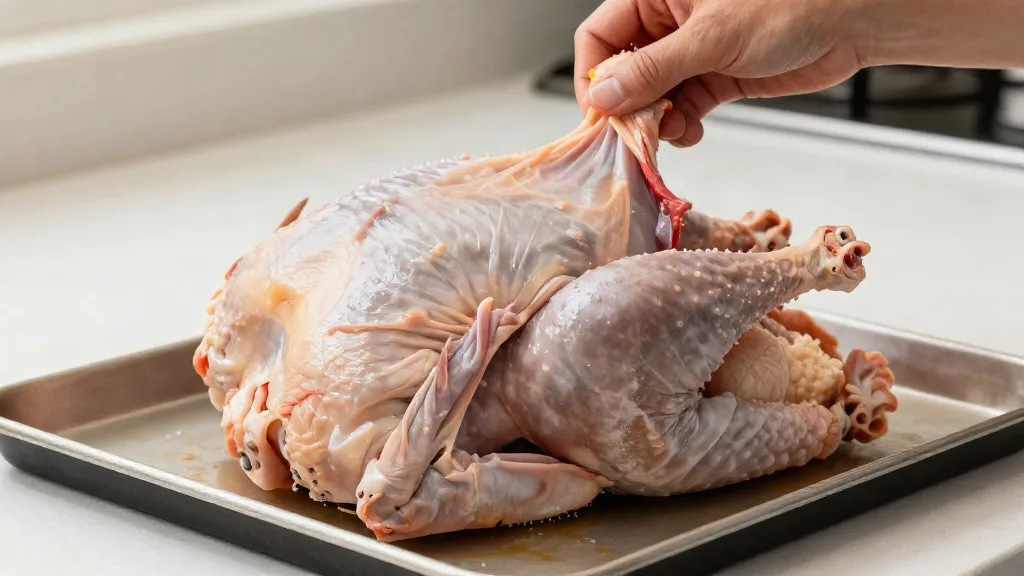
Once the turkey is thawed, remove the neck and the giblet bag from the body cavity and the neck cavity. Save them for gravy or stock. If they’re still frozen in place, that’s a sign the turkey needs more thawing time.
What to Do if Your Turkey Is Still Frozen
It happens to almost everyone at least once. Here are your options, from best to last resort.
Finish Thawing in Cold Water
If the turkey is mostly thawed but the center or cavity is still icy, move it to a sink of cold water, using the method above. A partially thawed turkey can finish in a few hours. Change the water every 30 minutes and cook it as soon as it’s done.
Cook It From Frozen or Partially Frozen
You can safely cook a turkey that’s still frozen, or partially frozen. According to the USDA’s Let’s Talk Turkey roasting guide, a fully frozen turkey takes at least 50% longer to cook than a thawed one.
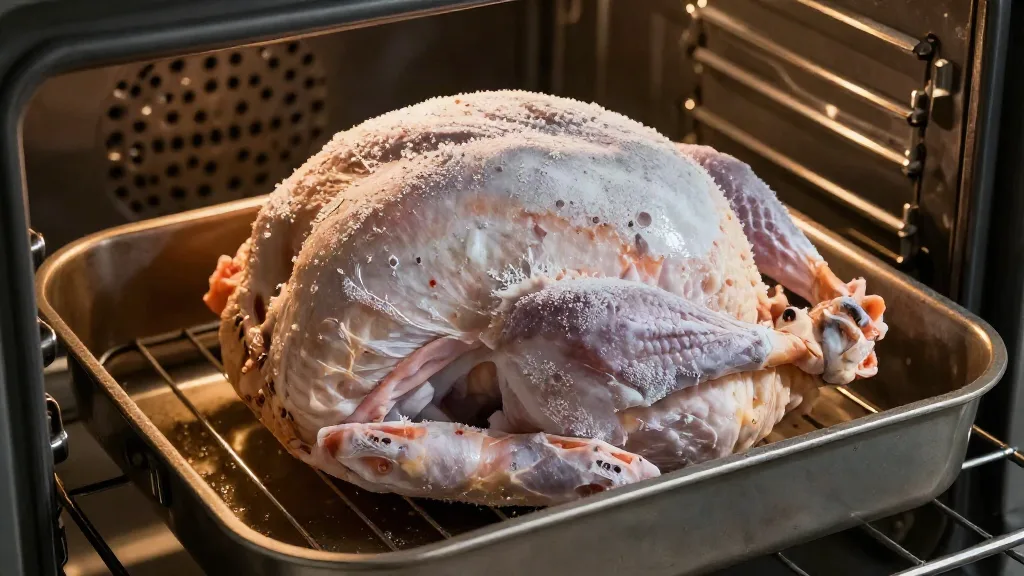
If you cook a turkey from frozen:
- Roast it at 325°F or higher, never lower.
- Remove the giblet packages with tongs partway through cooking, once they’ve loosened.
- Check the temperature in three places, the innermost thigh, the innermost wing and the thickest part of the breast. Every spot must reach 165°F, as explained in my meat internal temperature guide.
- Don’t stuff it. A frozen turkey can’t be stuffed safely, so bake the stuffing separately.
The result won’t be as even as a thawed turkey, and you won’t be able to season under the skin, but it’s a safe option that still gets dinner on the table.
Spatchcock It
If your turkey is thawed enough to cut, spatchcocking it, removing the backbone and pressing it flat, dramatically shortens the roasting time. A spatchcocked turkey roasts in a fraction of the time of a whole bird. I explain the technique in my how to cook a turkey guide.
Common Turkey Thawing Mistakes
- Starting too late. The most common mistake by far. Use the calendar above and set a reminder.
- Thawing on the counter or in the garage. The outer meat sits in the Danger Zone for hours.
- Using warm or hot water. It warms the surface into the Danger Zone before the center thaws.
- Not changing the water. Water left sitting warms up. Change it every 30 minutes.
- Forgetting the drip pan. Raw turkey juices can contaminate everything below it in the fridge.
- Leaving the giblets in. Check both cavities before cooking.
- Rinsing the thawed turkey. It spreads bacteria around your sink. In a USDA study, 60% of people who washed raw poultry had bacteria in their sink afterward. Pat it dry with paper towels instead.
Frequently Asked Questions
How long does it take to thaw a turkey in the fridge?
Allow about 24 hours for every 4 to 5 pounds of turkey in a refrigerator set at 40°F or below. According to the USDA, a 4- to 12-pound turkey takes 1 to 3 days, a 12- to 16-pound turkey takes 3 to 4 days, a 16- to 20-pound turkey takes 4 to 5 days, and a 20- to 24-pound turkey takes 5 to 6 days. Once it’s thawed, it can stay in the refrigerator for another 1 to 2 days before cooking, so it’s always better to start a day early than a day late.
Can I thaw a turkey overnight on the counter?
No. Thawing a turkey on the counter is not safe. The outer layers warm into the “Danger Zone,” between 40°F and 140°F, where bacteria multiply quickly, while the center is still frozen. The USDA says meat left on the counter to thaw for more than 2 hours is unsafe, even if the center is still frozen. Use the refrigerator, cold water or, for small turkeys, the microwave instead. If you’re short on time, cold water thawing takes about 30 minutes per pound.
How do I thaw a turkey fast?
The fastest safe method for most turkeys is cold water. Seal the turkey in a leak-proof bag, submerge it completely in cold tap water, and change the water every 30 minutes. Allow about 30 minutes per pound, which means roughly 6 to 8 hours for a 12- to 16-pound turkey. Cook it as soon as it’s thawed. If you have even less time, you can cook the turkey from frozen, though it will take at least 50% longer to roast than a thawed bird.
Can I refreeze a thawed turkey?
It depends on how it was thawed. A turkey thawed in the refrigerator can be refrozen without cooking, according to the USDA, though the quality may decline slightly. A turkey thawed in cold water or in the microwave should be cooked right away. Once it’s cooked, the meat can be frozen. Never refreeze a turkey that was thawed on the counter or left out at room temperature for more than 2 hours.
How long can a thawed turkey stay in the fridge?
A turkey thawed in the refrigerator can be kept there for 1 to 2 days before cooking, according to the USDA. Keep it in its wrapping, on a rimmed pan on the bottom shelf, at 40°F or below. This short window is useful for planning, because it lets you start thawing a day early and still have a safe margin. It’s also the perfect time to dry brine the turkey, which seasons the meat and helps the skin crisp in the oven.
Can I cook a turkey that’s still partially frozen?
Yes, it’s safe to cook a turkey that’s partially or even fully frozen. It will take longer to cook, at least 50% longer for a fully frozen turkey, according to the USDA. Roast it at 325°F or higher, remove the giblets as soon as they loosen, and check the temperature in the thigh, wing and breast. Every spot must reach 165°F. A partially frozen turkey may cook unevenly, so take several readings, and don’t stuff it.
What happens if I forget to remove the giblets?
If the giblets are in a paper bag, the turkey is still safe to eat once it’s fully cooked; just remove the bag after roasting. If the giblets are in a plastic bag and the plastic has melted or changed shape, it’s safest not to eat the turkey, since melted plastic can contaminate the meat. To avoid this, check both the main body cavity and the neck cavity when the turkey is thawed. If you’re cooking from frozen, carefully remove the giblet packages with tongs partway through cooking.
Should I wash my turkey after thawing it?
No. Washing a raw turkey doesn’t remove bacteria; it splashes them around your sink and kitchen. In a USDA study, 60% of people who washed raw poultry had bacteria in their sink afterward, and 26% transferred bacteria to the salad they made next. Instead, pat the turkey dry with paper towels, which also helps the skin brown. Cooking the turkey to 165°F in the thigh, wing and breast is what makes it safe.
Plan Ahead, Then Relax
That frozen-centered Thanksgiving turkey taught me the most important lesson about holiday cooking: the work starts days before the oven goes on. Check your turkey’s weight, find your date on the calendar above, and set a reminder now. A fully thawed turkey is the foundation for everything else, from dry brining to perfect roasting.
When your turkey is thawed, move on to my complete guide on how to cook a turkey, and when it’s out of the oven, my guide on how to carve a turkey will help you serve it beautifully. If you have a question about your own turkey, send me a message through the contact page.